Spotlight Series: Dawn Rittenhouse
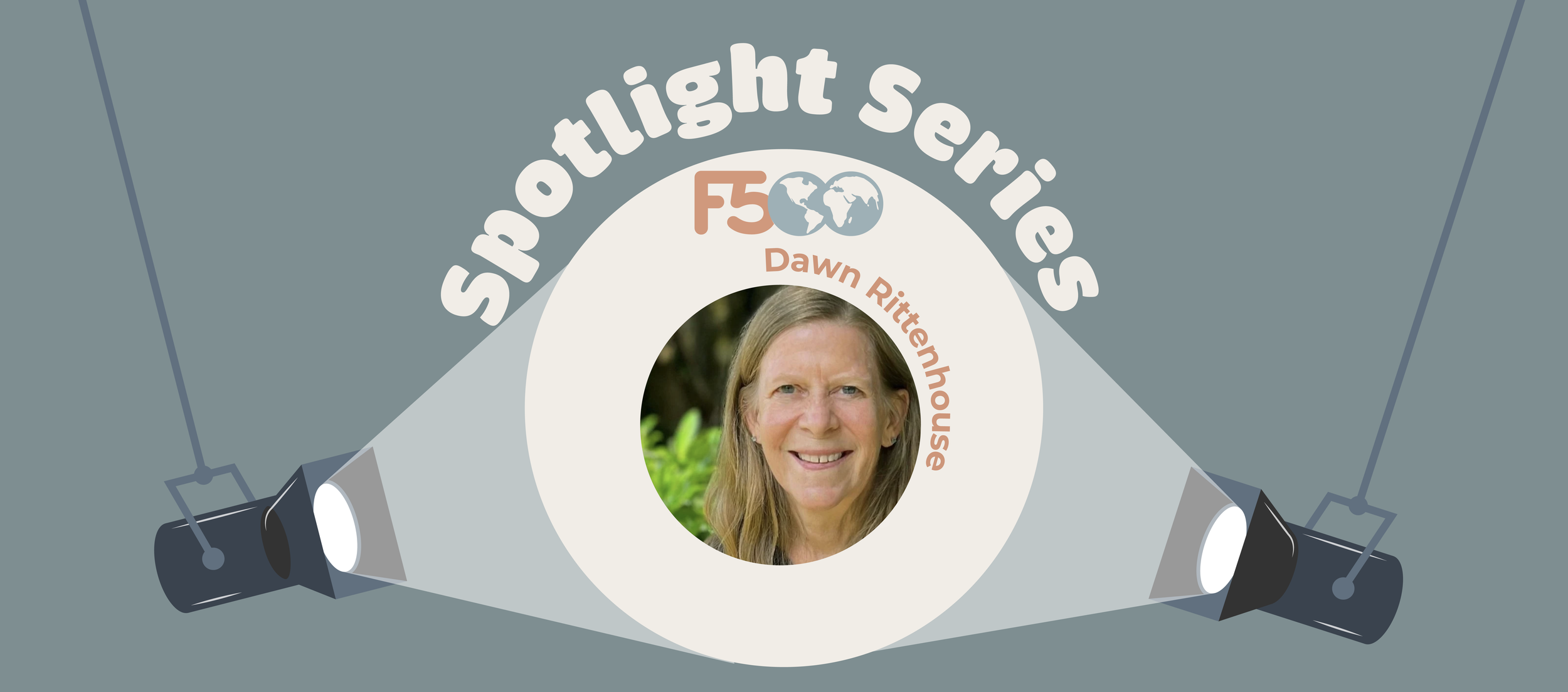
Meet Dawn Rittenhouse: Seeing Around the Corner
Board Member Dawn Rittenhouse has spent her career helping organizations anticipate what’s coming next and make decisions that hold up over time.
“A strong sustainability leader helps a company see around the corner.”
Finding the Path to This Work
Dawn didn’t set out to build a career in sustainability. In fact, she arrived there at a moment of uncertainty. After her role was eliminated, she found herself at a crossroads and reached out to DuPont’s VP of Environment with the idea to help integrate environmental thinking into business decision-making.
It was a risk, but one that paid off. She was brought into the organization to focus on what she describes as “good for business, good for the environment.” From that point on, she never looked back.
Her background in chemistry and economics, unusual at the time, became a strength by giving her a way to connect the science behind environmental issues with the financial and strategic decisions companies face every day. What began as a two-year detour turned into a 25-year career.
Why This Work Matters
Over time, Dawn became fascinated by a core tension that still defines sustainability today: How do companies make decisions that look beyond short-term policy signals and focus on long-term viability? “The last 10 years have been policy whiplash,” she notes. But the underlying environmental challenges have not changed.
For her, the real question is how companies move beyond reacting to policy and instead build strategies that are resilient, durable, and built to last.
Bridging Inside and Outside
One of the realities Dawn encountered early on is that sustainability leaders often sit in an uncomfortable middle. Inside the company, you are seen as the “tree hugger.” Outside, you are the “corporate suit.” Rather than resist that tension, she leaned into it.
Her role became one of translation, with bringing outside perspectives into the company in a way that leaders could understand, and helping stakeholders better understand how companies operate. Working with Future 500 expanded that approach, helping her connect with voices beyond the usual circles and better understand where real concerns, and real opportunities for alignment, existed.
The Limits of Common Ground
For all the emphasis on collaboration, Dawn is clear-eyed about its limits.“One of the hardest truths is that no matter what, you can’t always find common ground.”
She points to her work on GMOs as an example. Some stakeholders had concerns that could be addressed through changes in how the technology was developed or implemented, while others held deeply rooted perspectives that meant there was no acceptable path forward for them.
Rather than trying to force alignment, her team focused on understanding those perspectives more clearly. They grouped stakeholders by the nature of their concerns and engaged those conversations in ways that allowed for more holistic thinking about how to responsibly introduce the technology.
The lesson was not to force consensus, but to be more precise about where dialogue could lead to progress and where it could not. That clarity helped focus energy on the conversations most likely to move the work forward.
Rethinking the Role of Sustainability
When Dawn first took on the title of Director of Sustainability, most people did not even recognize the term. Explaining her job often meant listing a wide range of environmental and social issues, usually to blank stares. Today, sustainability is widely understood, but new questions have emerged.
One long-standing debate has been whether sustainability should be a dedicated role or embedded across the organization. Dawn believes it is time to move past that question.
A strong sustainability leader, in her view, is not just managing reporting or compliance. They are helping shape strategy, asking what risks and opportunities are on the horizon, and ensuring that leadership hears perspectives beyond the usual stakeholders of investors, customers, suppliers, and employees.
Looking Ahead
For Dawn, climate change is a defining force that will reshape how businesses operate.
She hopes Future 500 continues to help companies engage in difficult, and sometimes politically sensitive, discussions about how climate impacts everything from raw material sourcing to product end-of-life. “Have the tough conversations with stakeholders so [companies] not only survive, but truly thrive by building resilience and recognizing new opportunities.”
A Perspective Reconsidered
Early in her career, Dawn focused heavily on microeconomics and had little interest in policy. She now sees how deeply policy shapes both business and personal decision-making, and how important it is for companies to engage with stakeholders in shaping better outcomes.
It is a reminder that no single lens is enough. Real progress comes from connecting the dots between science, business, policy, and people.